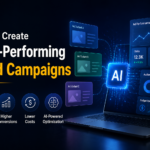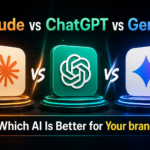
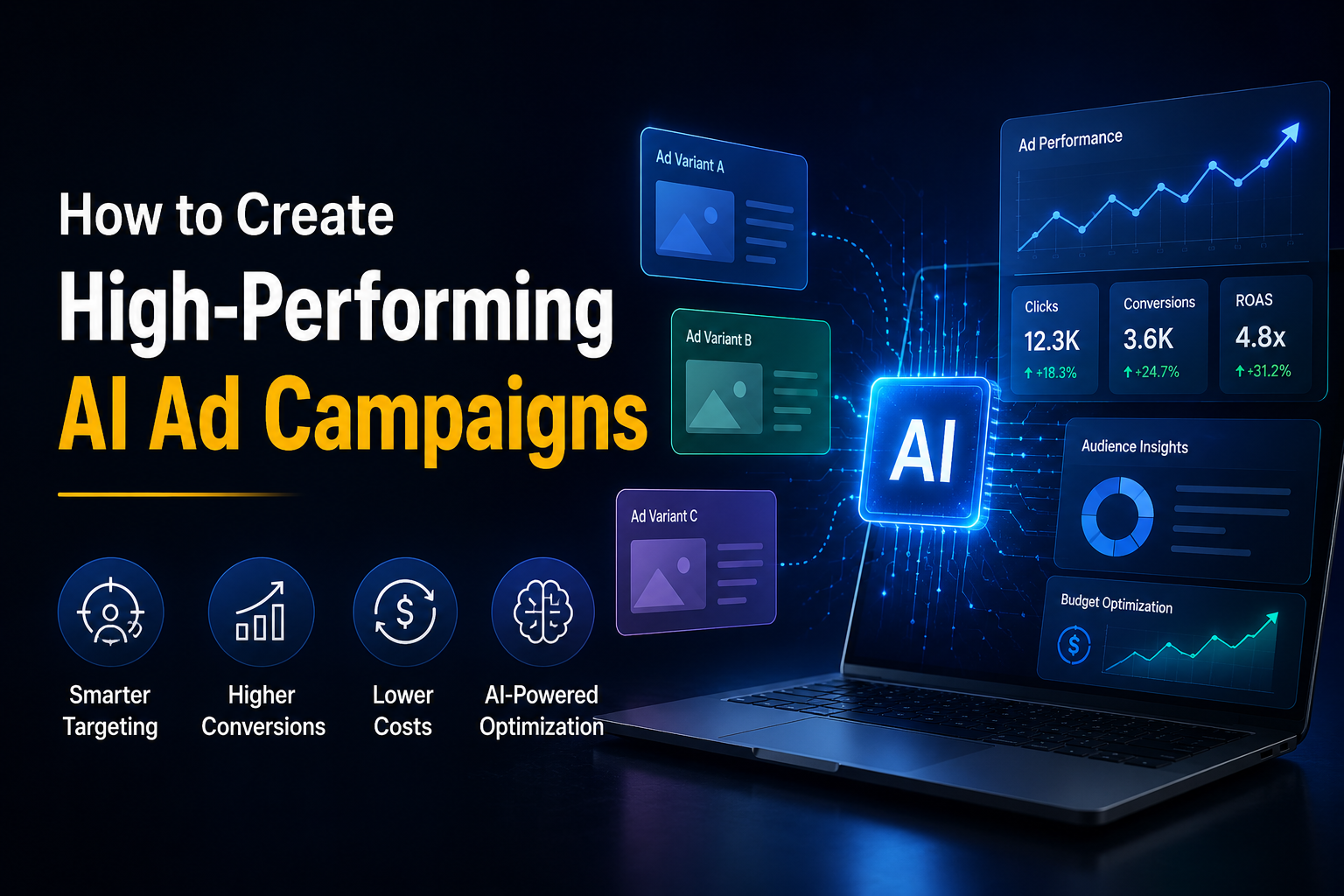
Every marketing blog out there is telling you to “use AI in your ads.” But nobody’s telling you how to do it without making your brand look like a robot wrote it at 2 AM.
At Marketing Scalers, we run performance-based campaigns for businesses across the USA — and we’ve seen both sides of this coin. We’ve seen AI-powered campaigns generate 3x the leads at half the cost. And we’ve also watched brands waste thousands on AI-generated content that their audience completely ignored.
The difference? Strategy.
In this guide, we’ll walk you through exactly how to build an AI ad campaign the right way — what tools to use, what pitfalls to dodge, and how to make sure your campaigns feel human even when AI is doing the heavy lifting.
What Is an AI Ad Campaign?
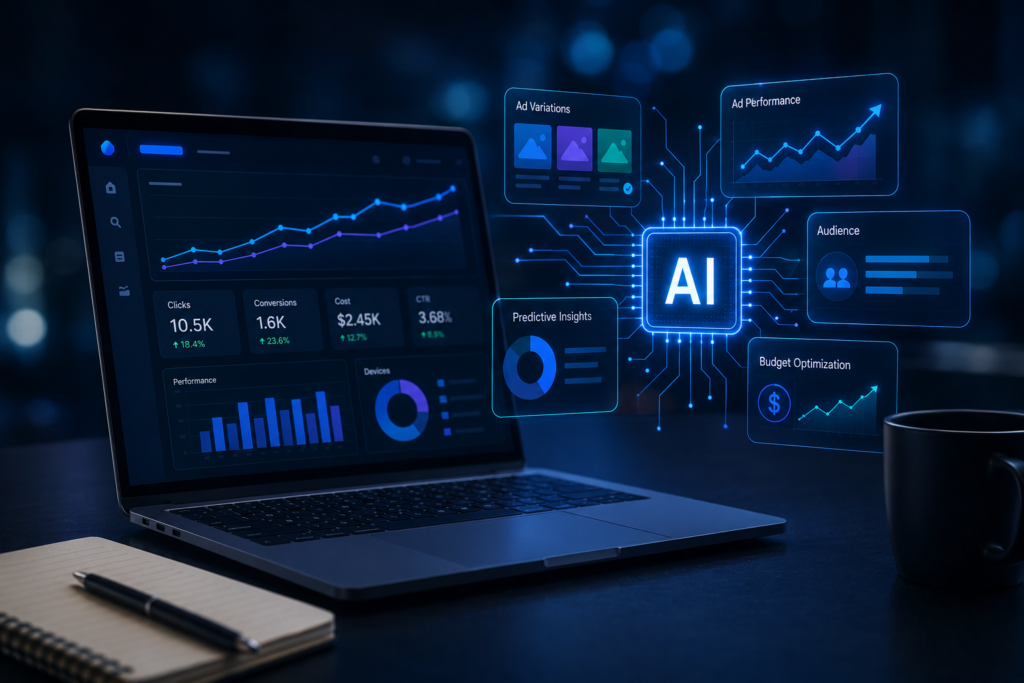
Think of it this way: imagine you have a super-smart assistant who can read millions of data points in seconds, write 50 ad variations in 10 minutes, and tell you which version will likely perform best — before you even spend a dollar.
That’s basically what campaign AI does.
An AI ad campaign is any advertising effort where artificial intelligence helps you with at least one part of the process — whether that’s writing the copy, choosing the audience, deciding when to show the ad, or figuring out your budget allocation.
It does NOT mean you hand everything over to a machine and walk away. That’s where most brands go wrong.
Why AI for Ad Creation Is a Game-Changer?
Before we get into the risks (and yes, there are real ones), let’s talk about why AI in advertising is worth your attention.
| Benefit | What It Means for You |
|---|---|
| Speed | Create weeks’ worth of ad variations in hours |
| Smarter Targeting | AI segments audiences faster and more accurately than manual methods |
| Budget Optimization | AI adjusts your bids in real-time so you don’t overspend |
| Personalization at Scale | Show different ads to different people without building 100 versions manually |
| Predictive Performance | Some tools can estimate which creative will perform best before you publish |
The Real Risks: Where AI Ad Campaigns Go Off the Rails
Now here’s the part most blogs skip over.
AI is powerful. But if you don’t manage it carefully, it will cause problems. Here are the most common ways AI ad campaigns fail — and what each one costs you.
| Risk | What Goes Wrong | Cost to You |
|---|---|---|
| Generic Creative | AI pulls from patterns across thousands of brands — your ad ends up looking like everyone else’s | Lost brand identity, poor engagement |
| Tone-Deaf Personalization | AI references a one-off purchase or shows ads at completely wrong moments | Customer annoyance, damaged trust |
| Over-Automation | AI optimizes for clicks but misses the bigger picture — loyalty, brand perception, quality leads | Wasted budget on low-quality conversions |
| Lack of Transparency | “Black box” AI makes decisions without telling you why — you can’t explain results to clients or bosses | Confusion, inability to improve |
| Obvious AI Creative | Your audience can clearly tell the visuals or copy were AI-generated and it doesn’t meet your brand’s quality bar | Brand damage, public backlash |
Coca-Cola learned this the hard way with their 2024 AI-generated holiday ad. Despite being one of the world’s most beloved brands, the ad was widely criticized for feeling cold, awkward, and emotionally flat. Viewers could see the AI’s fingerprints all over it — and they didn’t like what they saw.
The lesson isn’t “don’t use AI.” The lesson is: humans need to stay in the driver’s seat.
How to Build an AI Ad Campaign Step-by-Step
Here’s the framework we use at Marketing Scalers when running AI-powered campaigns for our clients.
Step 1: Define Your Goal Before You Touch Any Tool
AI is only as good as the direction you give it. Before opening any platform, answer these three questions:
- Who is my ideal customer? (Be specific — not “everyone” or “small businesses”)
- What do I want them to do? (Buy now? Sign up? Book a call?)
- What’s my budget, and what does success look like?
When you feed AI vague inputs, you get vague outputs. Garbage in, garbage out.
Step 2: Choose the Right AI Tools for Each Job
Not all AI tools do the same thing. Here’s a practical breakdown so you know what to reach for:
| Task | Best AI Tools to Use |
|---|---|
| Ad Copy & Headlines | ChatGPT, Claude, Jasper, Copy.ai |
| Image & Visual Creation | Midjourney, Adobe Firefly, Canva AI |
| Audience Targeting & Segmentation | Meta Advantage+, Google Performance Max, AdRoll |
| Bid Management & Budget Optimization | Google Smart Bidding, Meta Campaign Budget Optimization |
| Performance Analysis & Reporting | Triple Whale, Northbeam, Google Analytics 4 |
| A/B Testing at Scale | Mutiny, Optimizely, VWO |
Pro tip: Don’t use all of these at once. Pick one tool per job, learn it properly, then layer in more.
Step 3: Use AI for the Draft, Humans for the Polish
This is the most important part of the whole guide.
Use AI to generate your first five ad variations fast. Then sit down with a real human — a copywriter, a creative director, someone who actually knows your brand — and review each one.
Ask yourself:
- Does this sound like us?
- Would our best customer stop scrolling for this?
- Does it meet our quality standard?
Nike did exactly this when they used Midjourney to generate thousands of concept images for a video ad. Those images served as a storyboard. Human designers then took over, applied Nike’s brand guidelines, and built something genuinely great. AI created the raw material. Humans made it worth watching.
Step 4: Start Small, Test First
Never launch an AI campaign at full budget on day one. Here’s a smarter approach:
| Phase | What to Do | Budget |
|---|---|---|
| Test Phase (Week 1–2) | Run 3–5 AI-generated ad variations against your usual control ad | 10–15% of total budget |
| Learn Phase (Week 3–4) | Review results. Which AI version is winning? Why? | Same small budget |
| Scale Phase (Week 5+) | Scale the winning variation. Let AI optimize bidding. | Increase as results justify |
This way, you’re not betting the house on AI. You’re learning with it.
Step 5: Keep a Human in the Loop — Always
Set up weekly check-ins on your campaign performance. Don’t let AI run unattended for weeks at a time. Markets change, audience behaviours shift, and sometimes AI will chase a metric that looks good on paper but doesn’t mean anything to your actual business.
The best campaign AI setups we’ve seen work like this: AI handles the data processing and micro-decisions. Humans handle the strategy and final creative judgment.
AI Ad Campaign Dos and Don’ts
| DO This | DON’T Do This |
|---|---|
| Use AI to speed up creative ideation | Let AI publish content without human review |
| Be transparent about AI-assisted creative when relevant | Pass off fully AI-generated work as entirely hand-crafted |
| Test AI variations against human-made controls | Go all-in on AI from day one with your full budget |
| Use AI for data segmentation and bid management | Rely on AI to define your brand voice |
| Review AI suggestions weekly and course-correct | Treat AI recommendations as gospel truth |
Conclusion
AI is not coming for your marketing job. But marketers who know how to use AI are absolutely coming for the results of those who don’t. The brands winning with AI in 2026 aren’t the ones who handed everything to a machine. They’re the ones who treated AI like a very fast, very smart junior team member — one that needs direction, oversight, and a human with good taste making the final calls.
At Marketing Scalers, we build performance-based campaigns that combine AI efficiency with human strategy. Because clicks are cheap. Real results take more than that.